
Steadiness over scale
We do not grow because growing is what is admired. We grow only when a cottage falls vacant and a neighbour asks if she may live here.
Our governing document gives us a single charitable object: to manage the almshouses at Tring and to apply income for repairs and for the benefit of the almspeople. Everything on this page is an attempt to be honest about what that means in practice.
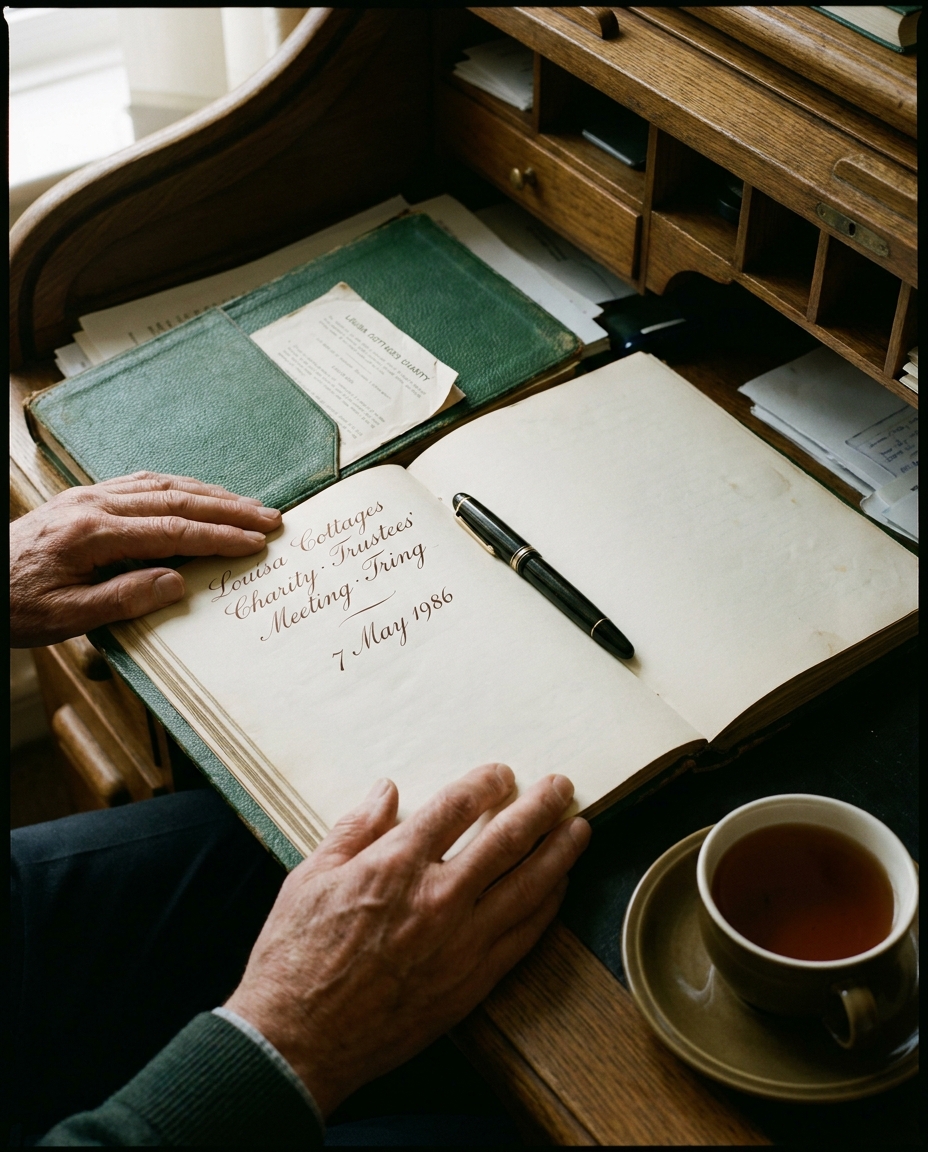
We do not grow because growing is what is admired. We grow only when a cottage falls vacant and a neighbour asks if she may live here.
When the books are tight we mend a roof before we print a leaflet. Always, without exception.
We use trades from within twenty miles of Tring. They have been here longer than we have. We pay them on the agreed day.
No decision about the cottages is taken without first asking the residents. The kitchen is not refitted because a trustee thinks the tiles dated.
We will not throw a sixtieth-anniversary gala. We will, perhaps, throw a hundredth-anniversary tea in 2063, if the cottages are still standing and the kettle still works.
If you reduce our work to three things, it is those. We try not to forget them when other things become loud.
A small charity does not need an elaborate theory. Ours is a single sentence with three links in it.
Weekly contributions, a small endowment income, the occasional donation, and four volunteers who give an hour a fortnight.
Spent on the slate, the boiler, the bathroom rails, the Sunday afternoon visit, the broad-bean seeds, and the winter coal.
Six almshouses, eight residents in 2026, each in a warm and weather-tight home for as long as they wish.
Three winters ago, in 2023, we tried to start a small lunch club for our residents and a few of the older neighbours from the streets that back onto ours. We hired the parish hall for a single Wednesday a month, cooked a simple meal, and laid five tables.
It did not work, in the way we had hoped. Our residents found the walk to the hall harder than we had thought, even with lifts arranged. The neighbours who did come were the ones who already knew each other from the Wednesday market — we did not, in the end, build the wider circle we had imagined. After eight months we stopped the club and put the money back into the Sunday Doors rota, which had been quietly working for twenty-six years and did not need our help to keep going.
We tell that story because it is true, and because trust is built more by admitting what we cannot do than by listing what we can. Almshouses, in our experience, do small good in known places. They are not the place from which to launch a new social programme. We know our edges now better than we did in the spring of 2023, and we are quieter for it.
A small almshouse in a Hertfordshire market town is not where you look for grand programmes. It is where you look for steadiness, kept up week after week without fuss.
Reverend H. Linton · Parish of St Peter & St Paul, Tring