
Spring in the almshouse garden.
A short note from the walled garden behind the south range, on the day the broad beans went in.
Written by Joseph (cottage five), with a hand from Marian Whitcombe
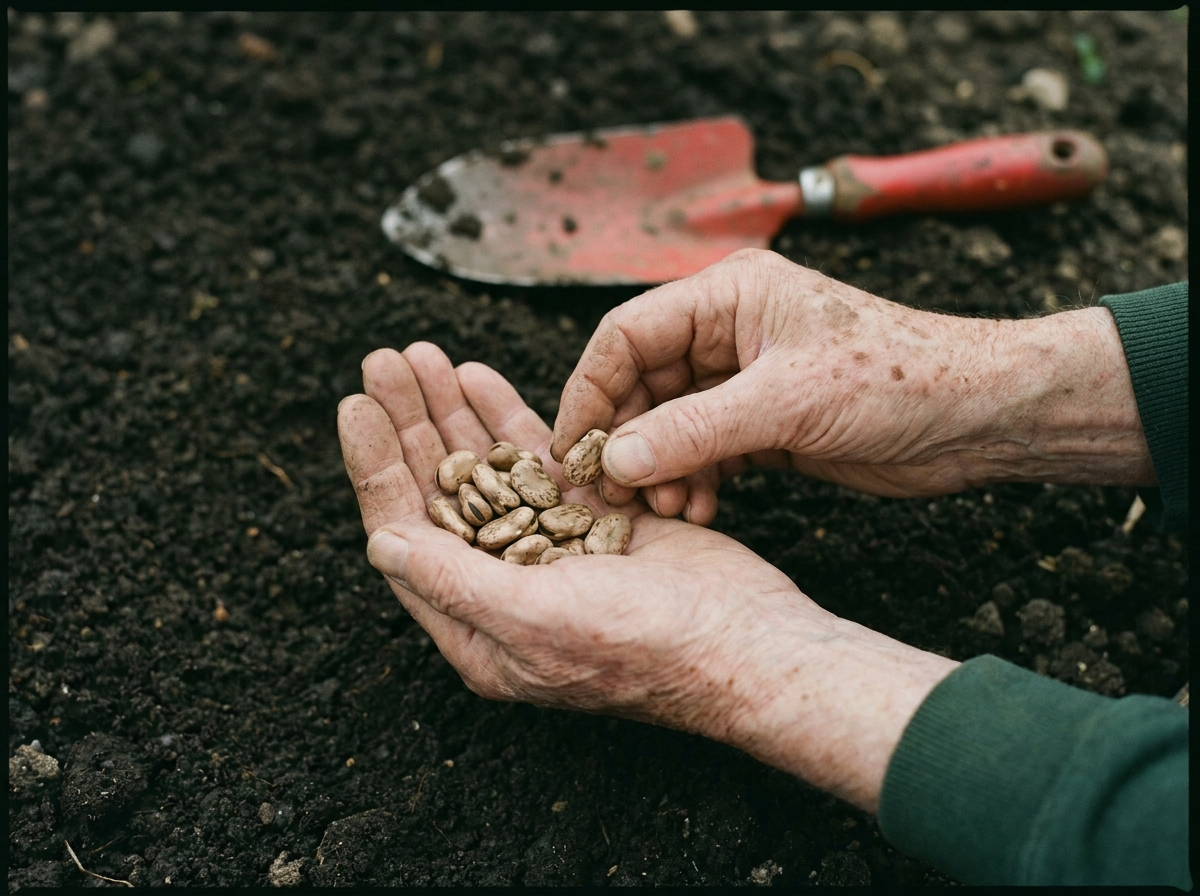
The broad beans went in on Saturday. It was the first dry day after a long wet end to March — the sort of weather where the garden feels heavier than it should and your boots are twice their weight before you have reached the second raised bed. Joseph was at the bed by half past nine, kneeling on the folded sack that lives behind the back gate for this purpose, a paper packet of seeds open beside him and his knees making the small complaints they make at the beginning of every season.
He has been growing broad beans here for six springs now. The variety is Aquadulce Claudia — the early one, hardier than most, and the one he says has the best chance of being up before the slugs have decided this is the year. He plants them in a double row, four inches apart, two inches deep, the way his grandfather did, allegedly, on an allotment in Leighton Buzzard in the 1950s. We have no way of verifying the Leighton Buzzard claim. We believe him because he is convincing about it.
What is in the ground
The kitchen-garden bed is, at the time of writing, holding the broad beans, the last of the winter chard (now bolting and being eaten by snails), a row of overwintered onions, and the small bed of garlic that went in in November. The herb corner has a stubborn rosemary, a sage that has finally come back after last year’s dieback, and three thyme plants that Margaret pots up cuttings from every autumn and gives away at the open garden.
The flowering border is doing what it always does at the beginning of April — not much, but with a sort of obvious patience. The hellebores have been good this year. The first daffodils came and went a fortnight ago. The lavender is starting to throw out the first grey-green new growth at the base, which means we are about three weeks from the bees being back.
A garden of this size, looked after by two volunteer gardeners and an eighty-four-year-old former signalman, does not need a master plan. It needs somebody to remember the year before.
Repairs to the bench
The garden bench — the long wooden one under the pear tree, the one we describe in the open-garden leaflet as the “reachable bench” — was repaired in February. Two of the slats had begun to soften where they meet the back rail, and the back rail itself was starting to wear at the joints. Daniel Holden came over on a Saturday morning in his old work clothes and replaced the two slats with seasoned oak from his father’s shed. We sanded it together; Joseph oiled it the next afternoon. By the time you read this it should be dry, and ready to sit on for the duration of the year.
We mention this because it is the kind of small repair which does not appear on any single budget line in our accounts. It is part of a longer rhythm of small things kept up, and the Slow Repairs programme exists, in essence, to make sure those small things are not allowed to compound into a single big repair we cannot afford.
Open garden
The open garden this year is on , from 14.30 to 17.00. We are part of the Tring & Wendover Open Gardens weekend again. The donations box will be by the back gate, and there will be tea and scones in the common room from three o’clock on. If you have a few hours to give on the Saturday afternoon as an Open Garden Steward, we would be glad of you. Details on the event page.
What we are watching
We are watching the south-range slates. We are also watching the pear tree, which has had a rough end of winter and is, for the first time we can remember, slow to bud. Joseph is hopeful but not certain.
Either way: the garden goes in another season. There are broad beans in the ground. There will be runner beans in five weeks. There will be a bench under the pear tree, regardless of how the pear tree does, because the bench was put there for the residents and not the tree.